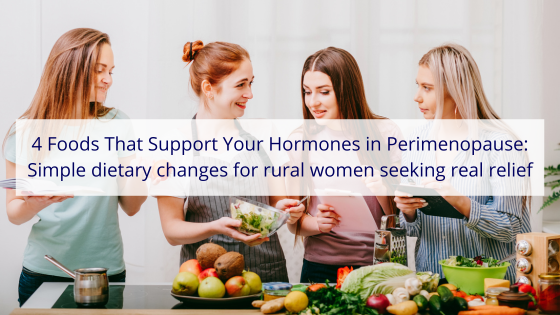
4 Foods That Support Your Hormones in Perimenopause
Simple dietary changes for rural women seeking real relief
Struggling with Perimenopause? Start with What’s On Your Plate
Hey there,
If you’ve been feeling moody, tired, foggy, or like your body’s just not doing what it used to, you’re not alone.
Perimenopause can affect everything from your sleep and weight to your mood and bones. And while treatments and lifestyle changes matter, the food you eat plays a powerful role in how you feel.
Ready to make some tasty changes that may also help your unpredictable symptoms, weight gain, and energy crashes?
Let’s look at 4 everyday foods that can ease symptoms and help you feel more balanced.
1. Nuts and Seeds
Why It’s Good
Nuts and seeds are loaded with plant-based protein, healthy fats, and fibre. They support hormone balance by stabilising blood sugar, reducing inflammation, and feeding your brain and heart.
Flaxseeds, in particular, are rich in omega-3s and lignans, powerful compounds for hormone regulation.
How to Use
Add 1 tablespoon of ground flaxseed to smoothies or porridge
Keep almonds or pumpkin seeds in the car for road trips
Sprinkle mixed seeds over soups or salads
Stir chia seeds into yoghurt for extra fibre
2. Legumes (Beans, Lentils, Chickpeas)
Why They Rock
Legumes are rich in protein and fibre, two things perimenopausal women really need. They help:
Support bone and muscle health
Balance energy and blood sugar
Reduce food cravings and improve satiety
How to Use
Add a tin of beans to a stew or curry
Roast chickpeas with olive oil and paprika for a crunchy snack or to toss into a salad
Simmer red lentils with garlic and cumin for a warming soup
Keep cooked legumes in the freezer for quick meals
3. Whole Grains
Why You Want Them
Whole grains give you long-lasting energy, support gut health, and keep your heart and hormones happy.
In perimenopause, your metabolism often slows down, and whole grains help you manage this with sustained fuel and fibre.
How to Use
Swap white rice for brown rice, barley, or quinoa
Start your day with oats, not sugary cereal
Use whole grain bread for better fibre and B vitamins
Try rye or spelt flour in baking when you can
4. Colourful Fruits and Vegetables (Especially Leafy Greens)
Why You Need Them
These are nature’s multivitamins. Rich in antioxidants, fibre, and phytonutrients, they support your:
Liver and detoxification pathways
Gut microbiome (which affects mood and sleep)
Bone density and inflammation levels
How to Use
Add spinach or kale to scrambled eggs
Throw frozen berries in your smoothie
Roast whatever’s in season, sweet potato, beetroot, pumpkin
Use frozen veg if you’re far from shops, they’re just as nutritious!
The Bottom Line: You Have More Control Than You Think
Living with perimenopause doesn’t mean resigning yourself to constant fatigue, mood swings, or weight gain.
Food can be medicine, and these small, rural-friendly shifts can help your body feel stronger, calmer, and more stable.
In fact, research shows women who make these types of dietary changes can reduce menopause symptoms by up to 37%. Imagine what that could feel like for you.
You have the power to make a difference in how you feel. Start with one small change today, maybe it’s adding a handful of nuts to your breakfast or swapping white rice for brown. Your future self will thank you.
Need Help Building a Diet That Fits Your Life?
I’m Annie, a naturopath working with women across regional Australia. I specialise in hormone health and perimenopause support—and I work online or in-person to help you feel better again.
- Want a personalised nutrition plan for your symptoms?
- Curious about joining a local perimenopause workshop?
Let’s chat. You don’t have to go through this alone.
Book a 1:1 consult or join me and Amanda at our upcoming Emerald workshops on July 19 and 26.
